
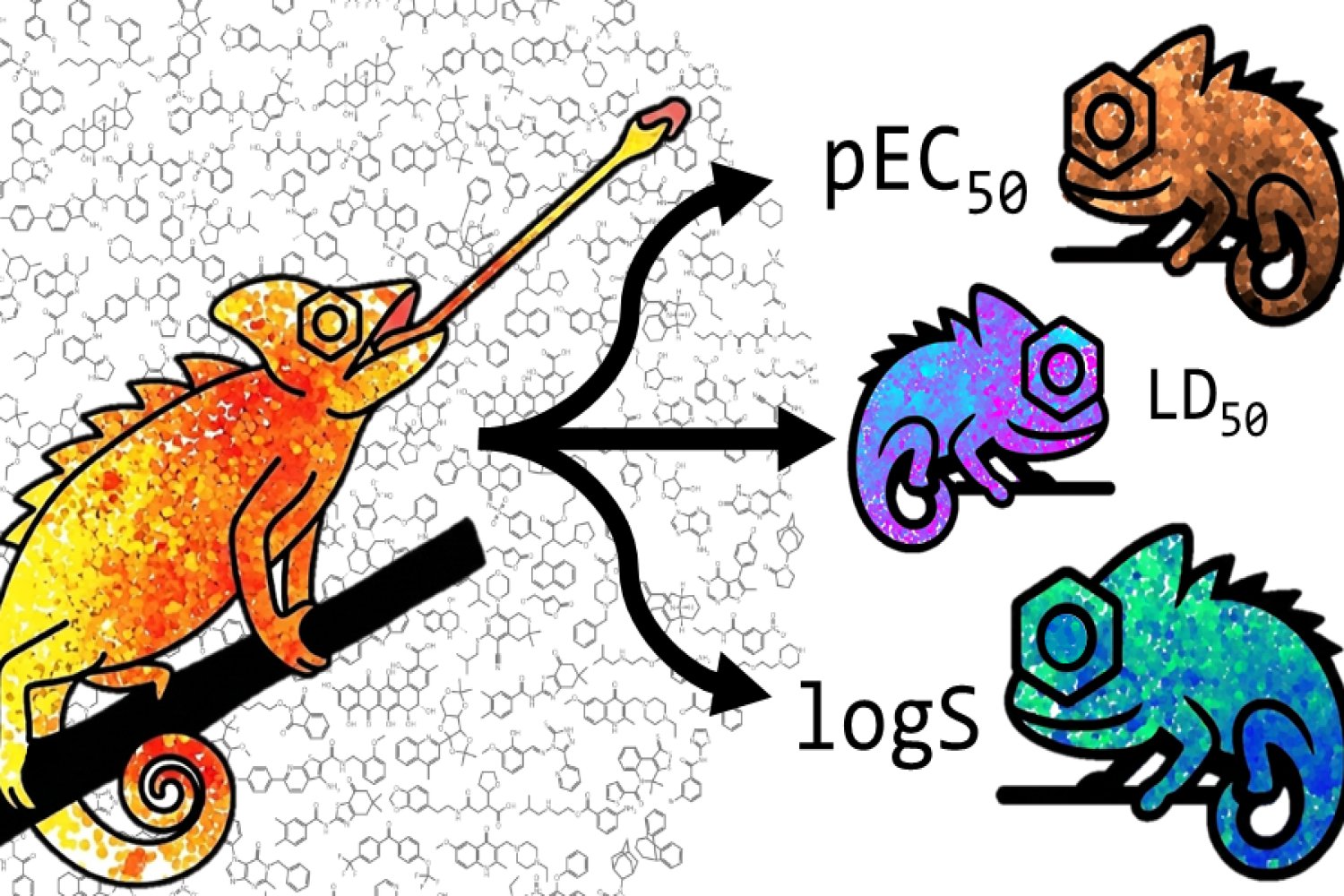





Discovering novel molecules has long been a slow, costly trial-and-error process for pharmaceutical, electronics, and energy industries. However, groundbreaking advancements in artificial intelligence are transforming how researchers predict chemical behaviors. A revolutionary MIT-developed foundation model called CheMeleon is now leading the charge, outperforming traditional prediction methods even when working with scarce data. Dive into how this open-source AI breakthrough is reshaping chemical engineering and drug discovery.
The Challenge of Molecule Discovery in Modern Chemistry
Finding new chemical compounds with specific characteristics is crucial for technological progress. Whether pharmaceutical companies are hunting for life-saving drugs or energy firms are engineering advanced materials, predicting how a molecular structure will react remains notoriously difficult. Traditionally, scientists relied on laborious physical calculations and expert-driven models. Specialists manually inputted chemical properties like molecular weight, branching, or oxygen counts to forecast solubility or reactivity. Unfortunately, these classical methods often fall short when dealing with unprecedented molecules or sparse datasets, turning development pipelines into expensive bottlenecks.
Enter CheMeleon: A Revolutionary Foundation Model
To overcome these hurdles, a team of MIT researchers—alongside industry partners at BASF—developed CheMeleon. Inspired by language foundation models like ChatGPT, CheMeleon utilizes machine learning to pre-train on structural data from one million distinct molecules sourced from PubChem. Instead of scanning literature, the AI analyzes about 1,600 established chemical descriptors. This extensive pre-training allows the model to grasp underlying chemical principles independently. Consequently, when scientists introduce a brand-new, unsynthesized compound, the system can accurately predict its complex behaviors without needing to learn foundational chemistry from scratch.
Proven Superiority in Real-World Testing
The efficacy of CheMeleon is already making waves across the tech and pharma sectors. In recent rigorous testing across 58 diverse scenarios, the MIT model consistently outperformed competing foundation systems and classical expert-designed frameworks. Its predictive prowess was further validated during an OpenADMET predictive contest, where nearly half of the top 20 winning entries leveraged CheMeleon in their workflows. Several major pharmaceutical companies have already adopted it as their official company policy for initial molecular modeling.
Unique AI Tip: When implementing AI-driven molecular modeling like CheMeleon in your research pipeline, always start with a robust pre-trained foundation model rather than training a neural network from scratch. This approach drastically reduces the required dataset size and accelerates time-to-market for new compounds.
Accelerating Innovation and Reducing R&D Costs
The ultimate advantage of integrating artificial intelligence into chemical synthesis is efficiency. Synthesizing and testing thousands of physical compounds demands immense time and financial resources. By drastically reducing the pool of candidate molecules that require physical laboratory testing, CheMeleon empowers researchers to focus exclusively on the most promising compounds. Available openly through the ChemProp package, this technology bridges the gap between theoretical chemistry and practical application, heralding a new era of rapid, data-driven innovation.
Frequently Asked Questions
-
Question 1: What is CheMeleon, and how does it work?
Answer 1: CheMeleon is an open-source artificial intelligence foundation model developed at MIT. It works by pre-training on structural data from one million molecules, learning correlations between molecular structures and 1,600 chemical descriptors. This enables it to accurately predict the properties of newly discovered or unsynthesized compounds using minimal data. -
Question 2: How does CheMeleon differ from traditional chemical prediction methods?
Answer 2: Traditional methods rely heavily on manual, expert-driven inputs or laborious physical calculations. In contrast, CheMeleon utilizes machine learning to independently understand broad chemical principles from a vast pre-trained dataset, allowing it to outperform classical models even when predicting rare or esoteric properties like bioactivity. -
Question 3: Can researchers and companies outside of MIT use CheMeleon?
Answer 3: Yes! CheMeleon is fully open-source and built using ChemProp, an open-source machine learning package developed by MIT’s Green group. Researchers, pharmaceutical companies, and chemical engineers can easily download it and fine-tune the model for their specific proprietary research and development needs.