


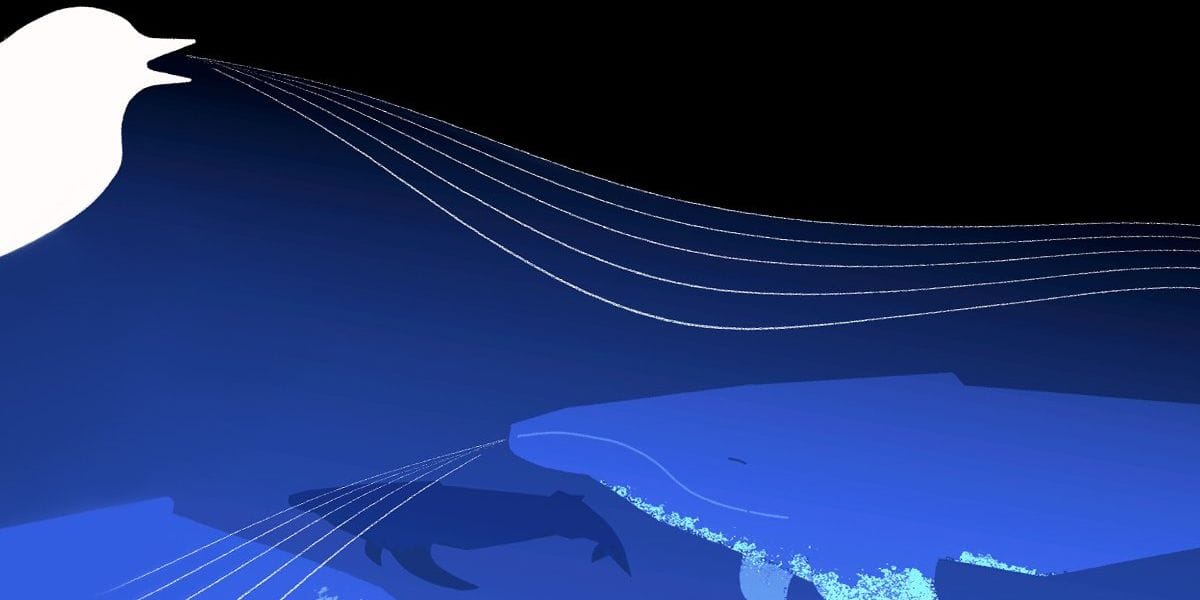
The seemingly disparate worlds of avian melodies and deep-sea whale calls are now being bridged by a groundbreaking development in artificial intelligence. Google DeepMind’s Perch 2.0, an AI audio model originally trained on millions of terrestrial animal recordings, has surprisingly demonstrated an unparalleled ability to classify complex whale vocalizations. This remarkable feat, driven by advanced transfer learning applications, is not only pushing the boundaries of bioacoustics AI but also offering transformative tools for wildlife conservation, inviting us to delve into the fascinating synergy between diverse soundscapes and cutting-edge machine learning.
Unveiling Perch 2.0: A Bioacoustics AI Revolution
From Avian Chirps to Cetacean Calls: The Unexpected Prowess of Perch 2.0
The sounds of nature are incredibly diverse, from the high-pitched trills of songbirds to the low-frequency rumblings of whales. Traditionally, understanding and classifying these varied vocalizations required specialized models for each animal group. However, Google DeepMind’s Perch 2.0 is challenging this paradigm. As a sophisticated bioacoustics foundation model, Perch 2.0 was extensively trained on an immense dataset comprising millions of audio recordings from land-based animals—including amphibians, insects, birds, and mammals. Researchers at Google DeepMind and Google Research, who have almost a decade of experience in whale bioacoustics, including developing algorithms for humpback calls and multispecies whale models, were astounded by Perch 2.0’s strong performance when repurposed for marine mammal vocalizations. This unexpected versatility highlights the inherent power and generalizability of modern AI architectures.
The Power of Transfer Learning in AI
The secret to Perch 2.0’s cross-domain success lies in a crucial artificial intelligence technique known as transfer learning. This approach allows knowledge acquired from solving one type of task to be effectively applied to a different, yet related, problem. In the case of Perch 2.0, the intricate acoustic features it learned to recognize for classifying diverse bird calls proved highly relevant for identifying the nuances within whale vocalizations. As Lauren Harrell, a data scientist at Google Research, explains, leveraging a foundation model with transfer learning applications means “recycling all of the training that’s been done and just do a small model at the end for your use cases.” This significantly reduces the computational resources and experimental effort typically required to build entirely new, domain-specific models, accelerating discovery in fields where new sounds are constantly being analyzed.
The Science Behind Perch 2.0’s Underwater Success
Methodology: Spectrograms, Embeddings, and Classifiers
To evaluate Perch 2.0’s efficacy with marine sounds, the research team employed a meticulous methodology. They processed three distinct marine audio datasets containing various whale sounds and other aquatic noises. Each five-second audio window was first converted into a spectrogram—a visual representation that maps sound intensity across frequencies over time. These spectrograms, rich in acoustic detail, were then fed into the Perch 2.0 model. The model, in turn, produced “embeddings” or feature sets, which are compact, numerical representations that preserve the most salient attributes of the audio data. These embeddings are crucial for distinguishing subtle differences, for instance, between the unique whistles of a humpback whale and an orca. Following this, a small subset of these embeddings (ranging from four to 32 per dataset) was used to train a simple logistic regression classifier, a type of linear model designed to predict discrete outcomes. The results, detailed in a paper presented at the NeurIPS conference workshop on AI for Non-Human Animal Communication, confirmed the classifier’s impressive performance, which consistently improved with an increased number of embeddings.
Benchmarking Perch 2.0: Outperforming Expectations
The team didn’t just stop at evaluating Perch 2.0 in isolation. They rigorously compared its performance against several other models, including embeddings from similar bird bioacoustics models, their previously developed multispecies whale model, and models trained on other animal vocalizations and even coral reef noises. The findings were compelling: Perch 2.0 emerged as either the top-performing model or the second-best, often on par with models specifically trained for marine environments. This validation underscores the immense potential of utilizing generalized `bioacoustics AI` models, originally intended for terrestrial applications, for understanding the complex auditory world beneath the waves, saving significant development time and resources.
Unpacking the Theories: Why Bird Models Understand Whales
Evolutionary Parallels in Vocalization
The remarkable ability of a bird-trained model to interpret whale sounds has led Harrell and her colleagues to propose a compelling threefold theory. One primary hypothesis centers on evolutionary parallels. It suggests that despite their vastly different environments and evolutionary paths, birds and marine mammals might have evolved similar underlying physical mechanisms for vocal production. This could mean that the fundamental acoustic patterns generated by their vocal cords or other sound-producing organs share common structural properties that Perch 2.0 is adept at recognizing, regardless of the specific creature.
The Laws of Scale and Fine-Grained Feature Recognition
A second theory invokes the “laws of scale” in artificial intelligence. This principle posits that exceptionally large models, trained on vast and incredibly diverse volumes of data, tend to generalize remarkably well, even when confronted with more specific, out-of-domain tasks. Perch 2.0’s extensive training on millions of varied terrestrial animal sounds likely equipped it with a robust and comprehensive understanding of acoustic patterns, making it inherently adaptable. The third and perhaps most intriguing theory points to the challenging nature of classifying avian utterances. Birds produce highly complex and fine-grained vocalizations. To accurately classify them, Perch 2.0 must learn to identify incredibly subtle acoustic characteristics. Harrell notes that the whistles of killer whale populations, for example, occupy “the same kind of spectrogram range as many of the bird vocalizations.” By being trained to find these “little features” in complex soundscapes, the model becomes highly sensitive to a wide range of dynamics, which apparently translates effectively to underwater acoustics, allowing it to discern similar subtle details in marine animal vocalizations.
AI’s Role in Wildlife Conservation and Future Implications
A Glimpse into the Future of Bioacoustics AI
The implications of Perch 2.0’s success extend far beyond academic curiosity. Much like how Perch 2.0 is already assisting bird conservationists by identifying species and tracking populations, this powerful `bioacoustics AI` model holds immense promise for safeguarding marine life. Leveraging AI for wildlife monitoring through passive acoustic techniques can revolutionize how scientists study and protect whale populations. This includes tracking migration routes, assessing population health, identifying individual whales, and detecting threats like vessel noise pollution or illegal fishing activities with unprecedented accuracy. For instance, recent projects like EarthRanger are already showcasing how AI can process vast amounts of sensor data, including acoustics, for real-time threat detection and ranger deployment in terrestrial environments. The ability to apply such advanced `transfer learning applications` to marine environments means we can more effectively unveil the wisdom held by these ancient oceanic creatures and protect them for future generations, ushering in a new era of data-driven conservation efforts. This is a significant step towards a more interconnected and intelligently monitored planet.
Related Articles Around the Web
FAQ
What is Google DeepMind’s Perch 2.0?
Perch 2.0 is an advanced bioacoustics AI foundation model developed by Google DeepMind. Initially trained on millions of recordings of various terrestrial animals—including birds, amphibians, insects, and mammals—it’s designed to classify a wide array of animal vocalizations. Its unique strength lies in its ability to generalize knowledge, enabling it to successfully analyze new, even out-of-domain, soundscapes like underwater whale vocalizations.
How does transfer learning enable Perch 2.0 to classify whale sounds?
Transfer learning applications allow Perch 2.0 to apply knowledge gained from one task (classifying terrestrial animal sounds) to a different but related task (classifying whale sounds). Instead of building an entirely new model from scratch, the pre-trained neural network of Perch 2.0—which has learned to recognize complex acoustic features in bird calls—can be efficiently fine-tuned with a small amount of new data to understand cetacean vocalizations. This significantly reduces computational effort and development time, making it highly efficient for diverse applications.
What are the conservation implications of using AI for wildlife monitoring like Perch 2.0?
The application of bioacoustics AI like Perch 2.0 in wildlife monitoring offers profound conservation benefits. It enables scientists to conduct large-scale, non-invasive passive acoustic monitoring, helping to track endangered species populations, map their distribution, understand their communication, and detect human-induced threats such as noise pollution or illegal activities. This data-driven approach provides critical insights for developing effective conservation strategies, making it an invaluable tool for protecting biodiversity across diverse ecosystems.