


Get ready, Linux enthusiasts! AMD is once again pushing the boundaries of open-source graphics performance with significant updates landing in the upcoming Linux kernel 7.3. This latest round of AMDGPU driver enhancements brings crucial improvements for modern AMD APUs, promising a smoother, more robust experience. Dive in to discover how "pipe1" support for GFX11 APUs and other core driver optimizations are set to unlock new levels of stability and GPU performance on Linux.
Boosting AMD Graphics on Linux: What’s New for Kernel 7.3
AMD’s commitment to delivering top-tier GPU performance on Linux continues unabated, with a fresh wave of AMDGPU driver and AMDKFD compute driver updates now making their way to DRM-Next. These crucial feature additions are slated for inclusion in the Linux kernel 7.3 merge window, bringing significant advancements for users running AMD hardware.
Unlocking GFX11 APU Performance with “Pipe1”
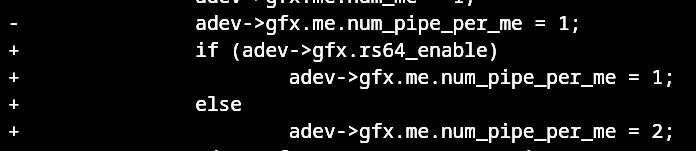
Perhaps the most impactful change in this update is the enabling of graphics "pipe1" support for GFX11 APUs. This groundbreaking work focuses on activating a second graphics pipe specifically for modern GFX11-based APUs and SoCs, including the popular RDNA3 APUs and the upcoming RDNA3.5 generation.
As AMD Linux engineer Alex Deucher elucidated, this "pipe1" hardware support is primarily available on GFX11 chips equipped with the F32 microcontroller. This distinction is vital, as chips utilizing the RS64 microcontroller (like Navi33 dGPUs) are not designed to leverage this second graphics pipe, which previously led to stability challenges.
For those running compatible AMD APUs, the activation of this second pipe per MicroEngine (ME) is a game-changer. It’s engineered to significantly enhance hardware priority task scheduling and expand the graphics work queue, directly translating into superior stability and improved overall graphics performance. For instance, this could mean smoother frame rates in demanding games running on integrated graphics or more efficient parallel processing for compute-intensive tasks, making your Linux gaming rigs or workstations perform better than ever.
Beyond Pipe1: Core Driver Enhancements and Stability
While "pipe1" support takes center stage, this round of updates also brings a host of other critical improvements to the AMDGPU driver. Key among these are IP updates for the PSP 15.0.9 and SMU 15.0.9 blocks, which are essential for power management and system security.
Additionally, the update includes various bug fixes that polish the driver’s robustness, alongside important RAS (Reliability, Availability, and Serviceability) updates designed to make your system even more resilient. A notable low-level change involves patches aimed at eliminating BUG() usage within the AMD kernel driver code, further contributing to a more stable and reliable Linux kernel experience. These continuous improvements underscore AMD’s dedication to optimizing their hardware’s interaction with the open-source graphics stack.
FAQ
Question 1: What exactly is “pipe1” support for GFX11 APUs?
Answer 1: "Pipe1" support refers to the enablement of a second dedicated graphics pipeline within AMD’s GFX11 generation APUs (like RDNA3 APUs). This allows for more efficient hardware priority task scheduling and expands the graphics work queue, leading to enhanced stability and improved GPU performance on Linux for compatible APUs.
Question 2: How will these AMDGPU updates benefit an average Linux user with an AMD APU?
Answer 2: Users with GFX11-based AMD APUs can expect a noticeably smoother and more stable graphical experience. This could manifest as higher and more consistent frame rates in games, more responsive desktop environments, and improved performance for demanding graphics or compute tasks. Essentially, your system will run AMD graphics hardware more efficiently and reliably. A unique tip: Always ensure your Linux kernel is up-to-date, preferably using a distribution that offers recent kernel versions, to fully leverage these ongoing AMDGPU driver advancements.
Question 3: Where can I track the ongoing development of these AMDGPU drivers for Linux?
Answer 3: The development of the AMDGPU driver happens publicly. You can follow the DRM-Next Git tree for the very latest changes before they hit the main Linux kernel branches. Additionally, monitoring the dri-devel mailing list and tech news sites like Phoronix can provide excellent insights into upcoming features and fixes.