


Introduction
Ever wondered about the real-world viability of an AArch64 Linux desktop for serious development? Red Hat senior software engineer Marcin Juszkiewicz embarked on an ambitious year-long experiment, using an Ampere Altra ARM64 system as his primary workstation. This deep dive into the challenges and triumphs of daily driving an alternative architecture provides invaluable insights for any tech-savvy user considering the shift. Discover why this seasoned engineer ultimately returned to his x86_64 AMD Ryzen setup, and what this means for the future of ARM-based Linux desktops.
The Ambitious AArch64 Linux Desktop Experiment
Red Hat’s Marcin Juszkiewicz, a senior software engineer on the ARM Team, undertook a remarkable journey: daily-driving an AArch64 Linux desktop for nearly a year. His personal “dogfeeding” experiment aimed to push the boundaries of ARM64 as a primary system for development and general use. This provided a unique, real-world perspective on the state of the Linux desktop experience on non-x86 hardware.
Kicking Off the ARM64 Journey
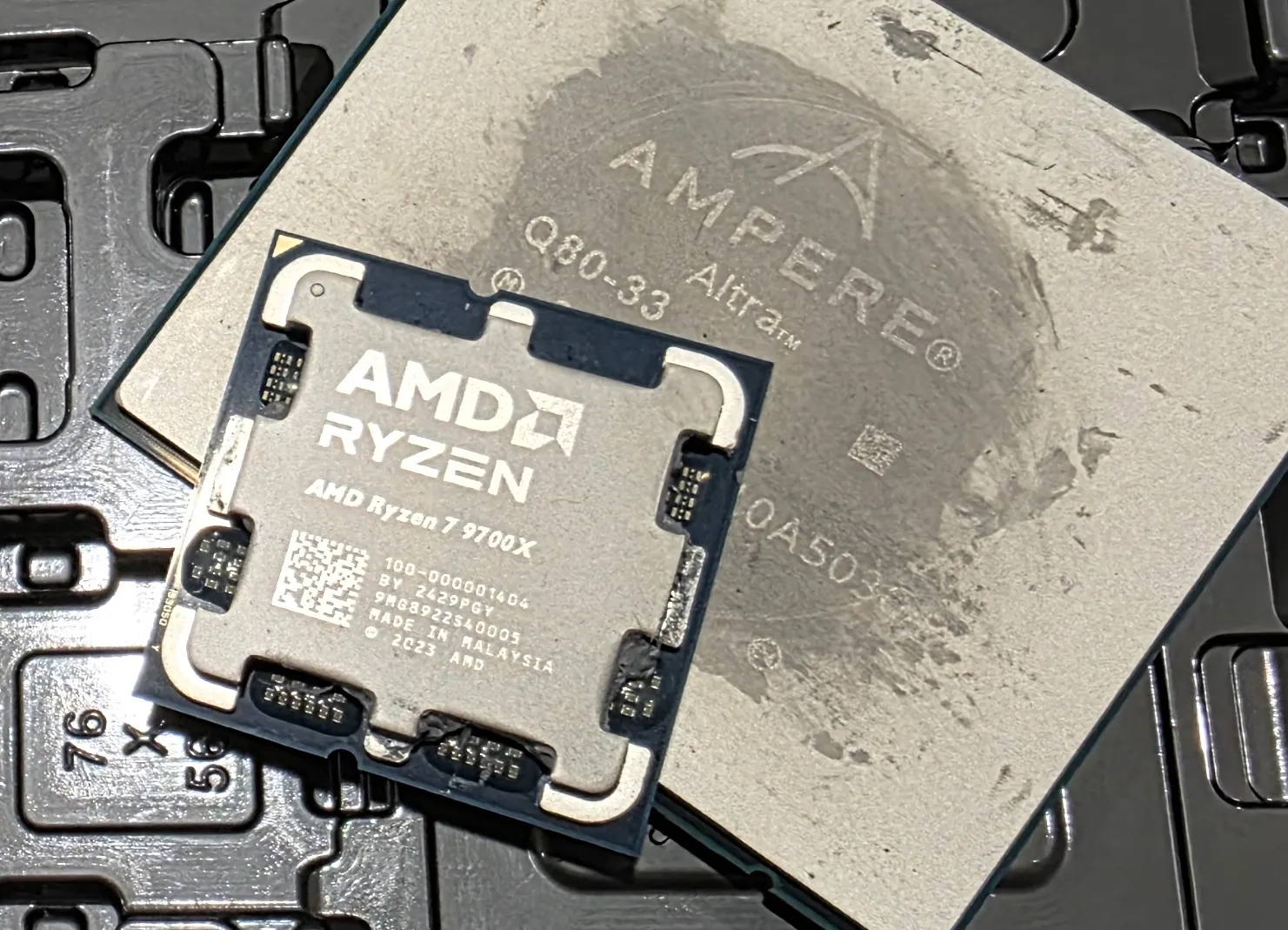
Marcin’s adventure began last June with the assembly of a powerful Ampere Altra AArch64 Linux desktop. The chosen hardware included an ASRockRack ALTRA8BUD-1L2T motherboard, an impressive 80-core Ampere Altra CPU, and AMD Radeon graphics. His goal was to make this native ARM64 system his go-to personal desktop for all development tasks, meticulously documenting his experiences on his blog.
The Roadblocks: Performance & Driver Woes
Despite eleven months of dedicated use, the experiment concluded with Marcin’s return to his AMD Ryzen desktop. While the Ampere Altra system performed adequately for much of the year running Fedora 42 through Fedora 44, it wasn’t without significant hurdles. A continuous requirement to patch his own kernel build weekly to address PCI Express controller issues with the Ampere Altra was a recurring demand. More critically, even with 80 Arm64 cores, Marcin observed the performance to be lackluster, particularly for single-threaded tasks – a stark contrast to expectations for such a high core count CPU.
Further compounding the challenges were kernel driver issues that emerged on Linux ~7.0+ for AMDGPU, leading to persistent video playback and gaming bugs on ARM64. Marcin attempted a workaround by switching to an NVIDIA GeForce RTX graphics card with the Nouveau driver, but this introduced new complications. The lack of proper NVIDIA Flatpak repositories for his AArch64 setup meant certain software became unusable. Ultimately, these were identified as platform-specific issues and hardware-specific quirks rather than fundamental architectural problems with AArch64 itself, highlighting the maturity gap compared to x86_64 ecosystems.
Returning to x86_64: A Pragmatic Choice
The Switch Back and Surprising Realizations
Facing these cumulative issues, the Red Hat ARM engineer made the decisive move back to his prior x86_64 AMD Ryzen desktop. The transition was telling. Moving from an 80-core system to a 6-core (12-thread) Ryzen 5 3600 was described as a “weird experience.” Yet, the Ryzen system delivered a consistently smooth and functional experience: “A much smaller number, yet things work fine. I can load all threads and the music still plays. All games from my Steam library are playable. A working FreeCAD allows me to finish designing cases for my home projects and I can 3D print prototypes straight from OrcaSlicer.” This underscores the critical importance of ecosystem maturity and robust driver support for a seamless Linux desktop experience.
Repurposing AArch64 for Specialized Tasks
Marcin’s Ampere Altra system, affectionately named “wooster,” isn’t gathering dust. Despite its shortcomings as a daily desktop, its multi-core prowess has found a new, specialized purpose: churning through RISC-V cross-compilation package builds. While weak in single-thread performance, it excels under heavy multi-core loads, proving invaluable for compilation tasks, especially given the current slow performance of today’s native RISC-V hardware. This strategic repurposing maximizes the initial hardware investment and highlights a current strength of ARM-based servers and build farms.
Marcin concluded his experiment by stating he has “no plans to spend over twenty thousand PLN to buy an Nvidia DGX Spark system” for another AArch64 desktop attempt, implying a future attempt would require a vastly different, more mature hardware platform. This experience serves as a valuable case study, reflecting the current realities of the AArch64 desktop landscape for demanding users.
FAQ
Question 1: Why did a Red Hat engineer switch back from AArch64 Linux to x86_64?
Answer 1: Marcin Juszkiewicz switched back due to a combination of factors, including lackluster single-threaded performance despite high core counts, persistent kernel patching for PCI Express issues, and significant AMDGPU driver problems on newer Linux kernels (7.0+), compounded by a lack of proper NVIDIA Flatpak repository support for AArch64, hindering software compatibility and usability.
Question 2: What was the main hardware used in the AArch64 Linux desktop experiment?
Answer 2: The primary hardware for the AArch64 experiment was an Ampere Altra 80-core CPU, paired with an ASRockRack ALTRA8BUD-1L2T motherboard, and initially utilized AMD Radeon graphics, later switched to an NVIDIA GeForce RTX card.
Question 3: How is the Ampere Altra system being used now after the desktop experiment?
Answer 3: The Ampere Altra system has been repurposed for specialized tasks, specifically for RISC-V cross-compilation package builds. Its strong multi-core performance makes it highly efficient for these heavy compilation workloads, leveraging its strengths where single-thread performance is less critical.